Espresso machine repair in Santa Cruz.
Over the hill · scheduled run
Espresso machine and coffee brewer repair across Santa Cruz County: downtown and the Westside, Seabright, Capitola, Soquel, Aptos, Scotts Valley, the San Lorenzo Valley and Watsonville. Countertop machines are collected on a scheduled run over Highway 17 and brought to our San Jose bench; cafe, roastery and hotel machines are serviced in place.
Santa Cruz is 32 miles from the bench and one mountain road away, so we run it on a schedule rather than on demand: a courier run over Highway 17 that collects countertop machines from Scotts Valley to Aptos and returns the previous run’s repairs, with on-site work for cafes, roasteries and hotels booked around the same day. The water is the reason to care. Unlike the Bay Area, Santa Cruz drinks its own: the San Lorenzo River and the North Coast streams through the Graham Hill plant, which ran 136 to 192 ppm hardness in 2025, and the Beltz wells in the east of the city, which ran 200 to 288. That is nine to seventeen grains per gallon, the hardest water on our map west of Highway 101, and it is why a Westside bar machine and a Capitola home machine both come to us with scale that a San Francisco machine would never see.
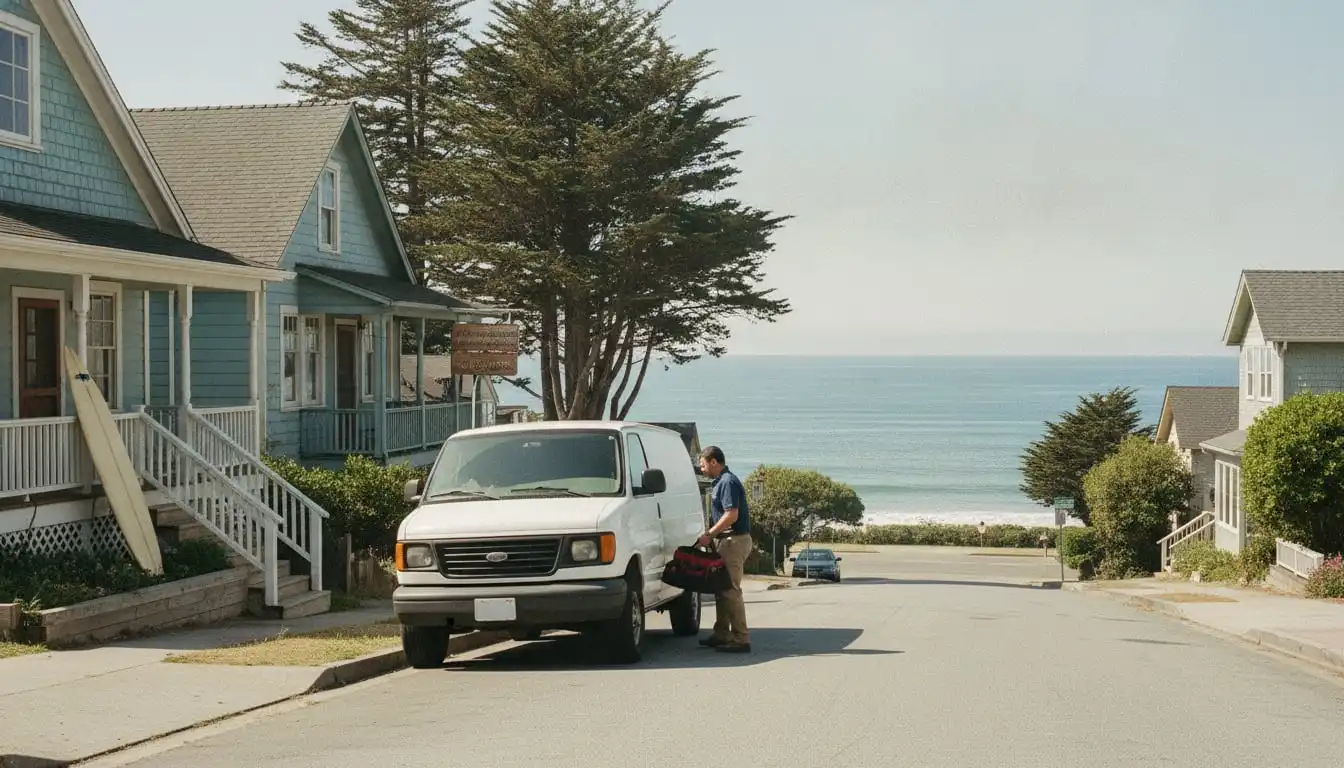
How the Santa Cruz run works
Book, and we name the day of the next run when we call back; the courier texts twenty minutes out, photographs the machine at the door and takes a signature on his phone. The run starts in Scotts Valley, works through the city and the Eastside, and ends in Capitola and Aptos; Watsonville is on it with notice. The diagnostic is $145 and includes the courier both ways over the hill. It is credited in full toward the repair when you approve the estimate. The bench diagnostic happens that week, the written estimate and photo report come by text, and the repaired machine comes back on the next run, or the one after when a part has to ship.
The schedule changes one thing, which is urgency. A home machine that fails the day after the run waits for the next one. A cafe that cannot wait gets an on-site visit instead, and for a bar that is down we send a technician over 17 outside the run when the calendar allows.
Pacific Avenue, the Westside and the roasteries
For a county its size Santa Cruz has a serious bar scene, and a roastery at the centre of it. Pacific Avenue downtown, Swift Street and Mission Street on the Westside, Seabright, 41st Avenue and Pleasure Point, the Capitola Village, and the roastery cafes that supply most of them. The machines: La Marzocco Linea PB and Strada in two and three groups, Synesso S200 at the roastery end, Nuova Simonelli Aurelia Wave and Appia Life in the neighbourhood rooms, a Slayer Steam here and there, with Mahlkönig EK43 and E65S and Mazzer Robur beside them.
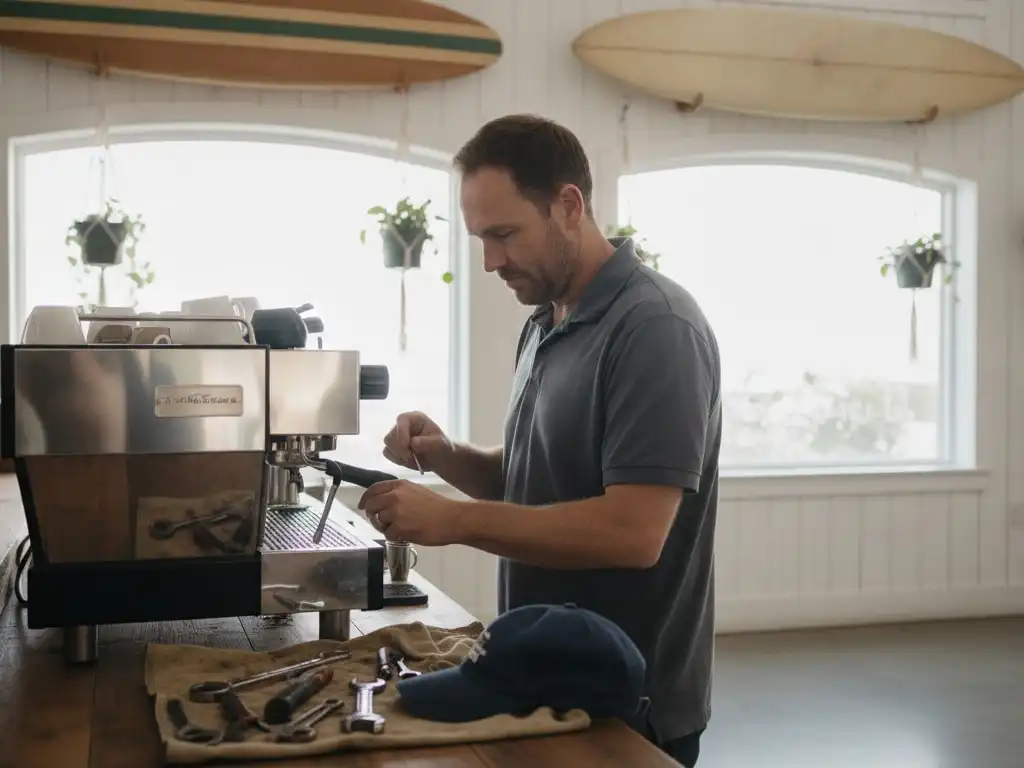
These are serviced in place. On Graham Hill water the first call is nearly always scale: a blocked gicleur, a steam boiler safety valve weeping, a pressurestat that hunts, a heating element that trips the breaker because the scale has insulated it. Then the wear list on top. Commercial on-site service starts at $749 for a one-group machine and $1,049 for two; a single fault is estimated after the $145 visit. We carry the group seals, screens and the common valves over the hill on every run.
Hotels, the campus and the office machines
The hotels along West Cliff and the Beach Boardwalk, the Capitola and Aptos inns, the UCSC food service and the office parks in Scotts Valley and Watsonville run super-automatics and batch brewers: Franke A600 and A800, Schaerer Coffee Soul, Jura GIGA X8 and WE8, Bunn and Curtis for banquet and breakfast volume. On 9 to 17-grain water a GIGA X8 doing 200 drinks a day needs its boiler, flowmeter and brew unit descaled on a schedule, and a Bunn brewer here is the clearest case we know for descaling before you call: nine times in ten the slow brew and the no-hot-water complaint are scale, not the machine.
We take these on a maintenance contract, $400 to $2,800 a year by machine count and interval, with a visit on the run every eight to twelve weeks and a priority call-out in between. A hotel with three or more machines gets 15-25% off the single-machine rate.
Home machines on the run
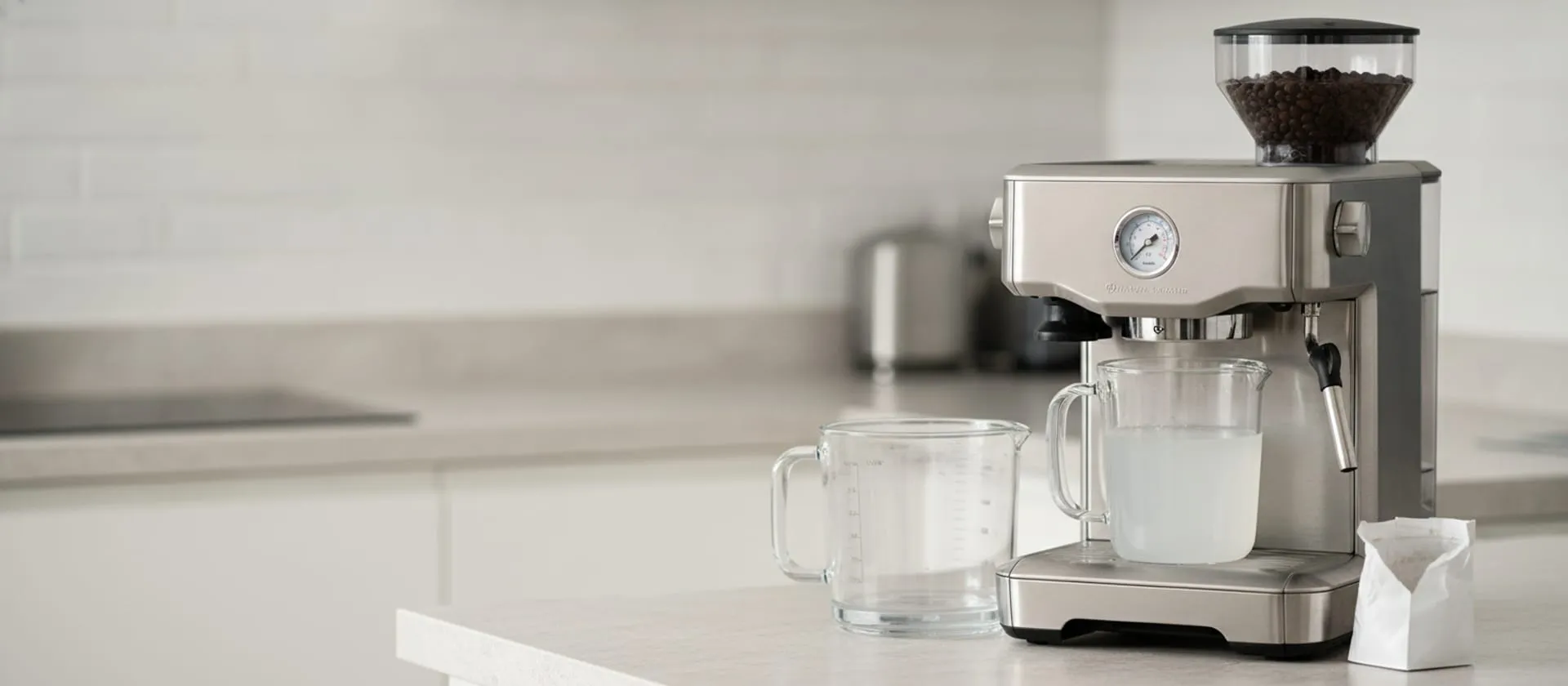
Most of what rides the run is a home machine from the Westside, Seabright, Live Oak, Capitola, Aptos, Scotts Valley or Felton: Breville Barista Express, Barista Pro and Oracle Touch, Jura E8 and ENA 8, DeLonghi Dinamica and Magnifica Evo, Rocket Appartamento, Lelit Anna and Bianca, Profitec Go and Pro 500, Gaggia Classic Pro. On this water the first repair on almost any of them is scale: a Breville thermocoil blocked at three years, a Jura reporting “fill system” because the flowmeter is coated, a Rocket heat exchanger losing its bore. Flat-rate service on the bench is $159 for an entry machine, $219 to $319 for a super-automatic, $329 for a compact Jura, $249 for a Breville prosumer and $429 for an E61 machine with a $119 add-on for the heat-exchanger descale that here is usually needed.
We also decline work honestly. A drip machine under $150 new is not worth the diagnostic and we say so on the phone. A ten-year-old super-automatic with a scaled boiler and a failing brew unit is usually a replacement conversation, and we would rather have it before you pay for the courier.
Why the manufacturer’s descale schedule is wrong here
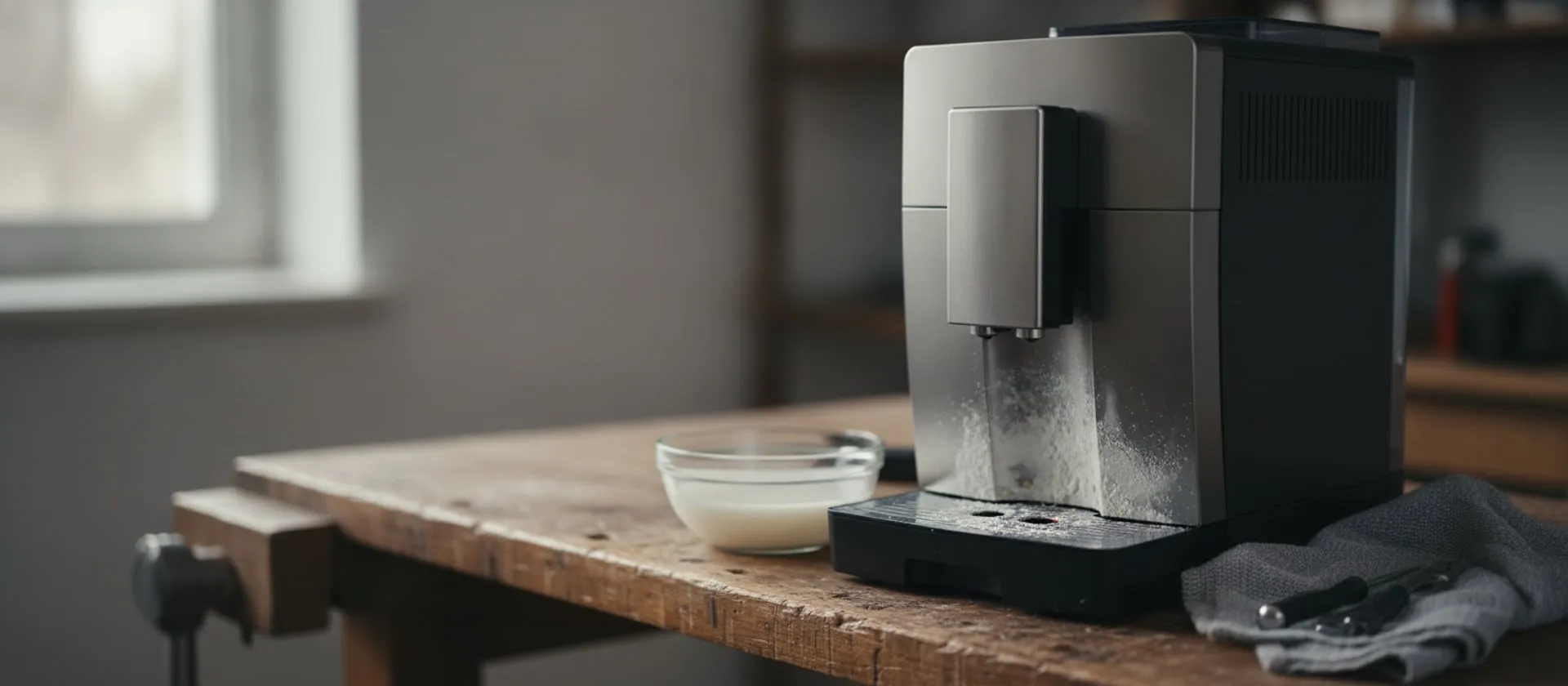
Breville, Jura and DeLonghi write their descale intervals for water around 8 to 12 grains; most of Santa Cruz is 9 to 17, and the Beltz well zones on the Eastside are at the top of that. The practical correction is simple. A home machine here gets a descale every six months, and a softening pouch in the tank between them; a Jura gets its hardness setting put at the real number so it counts litres honestly. A plumbed machine gets a softener or blending stage ahead of the carbon cartridge, the hardness tested at commissioning and the number written on the filter head. At 12 grains a two-group machine making 200 drinks a day puts close to a kilogram of scale into its boilers every year without one.
The installer default, a single carbon block changed twice a year, removes chlorine and taste and leaves every grain of calcium in the line. That is the pressurestat in month nine and the heating element in year two. We would rather sell the softener now.
Watsonville, the valley and the county line
Watsonville and the Pajaro Valley are on the run with notice and on-site for commercial accounts. Felton, Ben Lomond and Boulder Creek in the San Lorenzo Valley are on the run on their own water districts, all of them groundwater and all of them hard. Over the hill, Los Gatos and the rest of Santa Clara County are on the San Jose page; down Highway 1, the Monterey page picks up at Moss Landing.
Local water
profile.
The City of Santa Cruz water system is local surface water, and local surface water in the Santa Cruz Mountains is hard: the 2025 report puts the Graham Hill plant, which treats the San Lorenzo River and the North Coast streams and supplies about 80% of the city, at 160 ppm average hardness, and the two Beltz well plants on the east side at 258 and 265. Alkalinity follows the same split, 108 ppm at Graham Hill and 149 to 182 at the wells, so the water buffers hard and scales fast. Capitola, Soquel and Aptos are on the Soquel Creek Water District’s groundwater, a separate system we test at the tap rather than quote; Scotts Valley and the San Lorenzo Valley districts are groundwater too. For an espresso machine every supply in the county is on the hard side of the SCA range: a softener ahead of the cartridge on a plumbed machine, a softening pouch in the tank at home, and a six-to-nine-month descale interval.
Our typical
Santa Cruz dispatch.
Brands we service most in Santa Cruz
Related services
- Espresso Machine & Coffee Brewer Repair Diagnostic-first · 49 brands
- Water Filtration for Espresso SCA-spec · Cartridge service · Hard-water LA
- Emergency Espresso Machine Repair Same-day on-site · San Jose, SF, Peninsula, East Bay, Santa Cruz, Monterey
- Maintenance and contracts in Santa Cruz Published price per machine class · cafe contracts
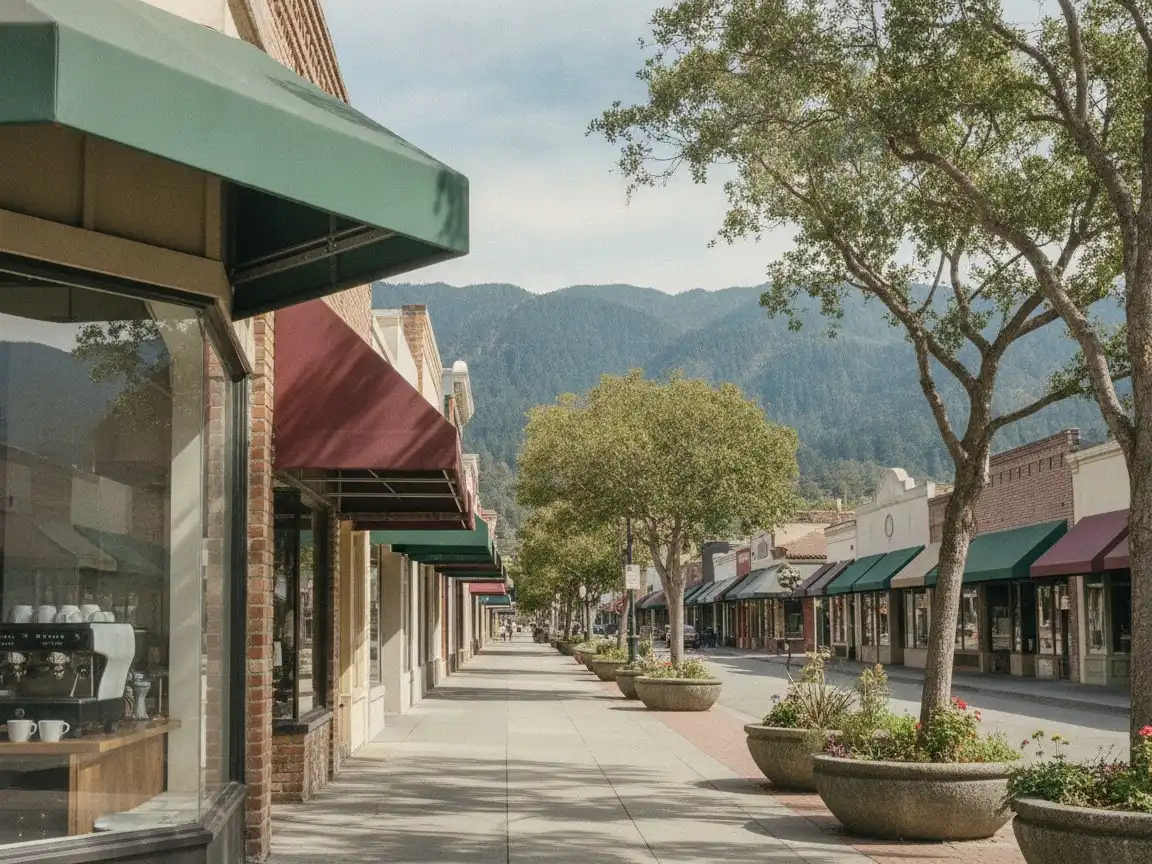
Around Santa Cruz.
Frequently asked.
Q-01 Do you really come to Santa Cruz?
Q-02 How long is my machine gone?
Q-03 What do the $145 and the $250 cover?
Q-04 How hard is Santa Cruz water?
Q-05 Can a cafe get a same-day visit?
Q-06 My Bunn brewer is slow and the hot water tap stopped. Is it the machine?
Q-07 Do you cover Watsonville and the San Lorenzo Valley?
Typical call from Capitola: a three-year-old Breville Oracle Touch, collected on the run. Symptom: extraction slowed over a month, then a “heating” message that never cleared. On the bench the thermocoil was a third blocked with scale and the steam boiler’s element was coated; the owner had been using the built-in descale cycle with tap water from a 14-grain supply. Thermocoil and steam boiler descaled by circulation, group gasket and shower screen replaced, grinder and extraction pressure recalibrated, twenty shots pulled. On the bench 2.5 hours; $249 Breville prosumer service plus the gasket, the diagnostic already paid coming off that figure; back on the next run with a softening pouch for the tank and a six-month reminder.
Santa Cruz is the one place on our northern map where the Southern California advice applies without edits. The descale interval printed in the manual is wrong by half here; a home machine needs a softening pouch and a descale every six months, and a cafe machine needs the softener stage that most installers leave out to keep the quote low. We would rather sell you a $40 pouch now than a $400 thermocoil in year three.
Brands we service in Santa Cruz.
The bench mix in Santa Cruz runs from kitchen-counter machines to two-group cafe units, and the truck stock follows it: Bunn repair in Santa Cruz, Estella Caffe repair in Santa Cruz, Fetco repair in Santa Cruz, Gaggia repair in Santa Cruz, La Marzocco repair in Santa Cruz, Modbar repair in Santa Cruz, Philips repair in Santa Cruz, Rocket Espresso repair in Santa Cruz, Slayer repair in Santa Cruz and WMF repair in Santa Cruz are the usual calls here. Anything else on the bar — the full 49-brand catalog gets the same diagnostic-first visit.
Worth reading before you call.
- Descaling Didn't Fix It — What Next
Descaling only reaches the water path. If the machine is still slow or weak afterwards, the fault was never scale — here is what it usually turns out to be.
- How to Descale a Breville Espresso Machine
How to descale a Breville Barista Express or Barista Pro, step by step from Breville's own instruction books, and what a descale cannot fix on these machines.
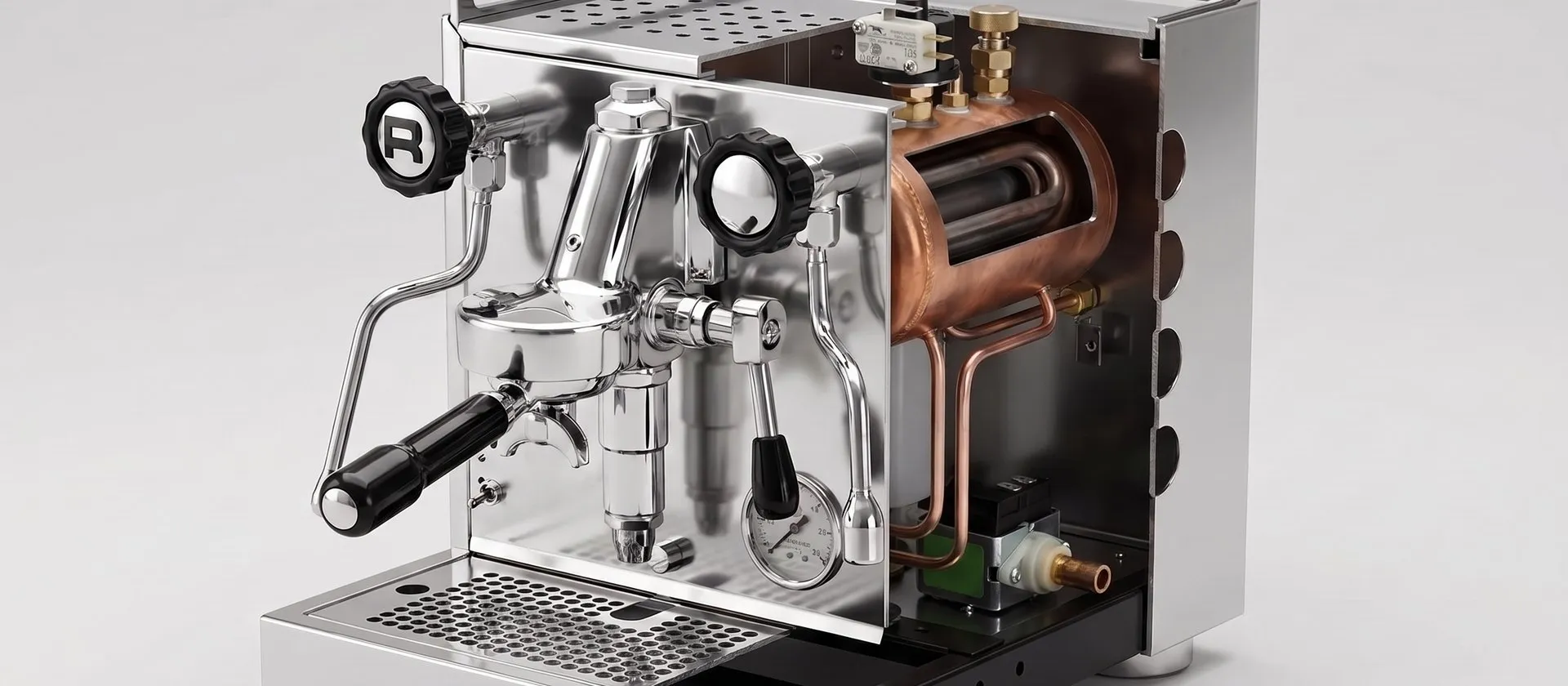
- Rocket Appartamento parts diagram
Interactive cutaway of the Rocket Appartamento: tap a part, follow the water through the heat exchanger to the E61 group, then see six months without service.
- R-01 City of Santa Cruz Water Department — 2025 Annual Water Quality Report: hardness 160 mg/L avg Graham Hill (136-192), 258 Beltz (200-272), 265 Beltz 12 (236-288); alkalinity 108 / 149 / 182 mg/L; TDS 262 / 508 / 435 mg/L Accessed October 2026
- R-02 Specialty Coffee Association — water for brewing standard Accessed October 2026
Every figure on this page is ours to stand behind — who we are and what we're licensed for.
Need service in Santa Cruz?
Dispatch in hours.
Tell us your machine, your model, and what's wrong. We'll respond within the hour with a diagnostic estimate and ETA.
Emergency · 24/7
20 cities · same-day